An online fundraising talk by Susie Orbach for the Freud Museum, London
11 September, 3:00 pm – 4:00 pm
Donation
For more information, visit: https://www.freud.org.uk/event/7916/

 Balint Consultancy, London
An online fundraising talk by Susie Orbach for the Freud Museum, London
Donation
For more information, visit: https://www.freud.org.uk/event/7916/
Rather than counting calories and stigmatising fat, we need to take on the food and weight-loss industries
‘Children’s early relationships with eating are integral to the patterns they later develop as adults.’
Published onTue 28 Jul 2020 10.00 BST The Guardian
Being overweight has never just been about the amount of calories you consume. The government’s new obesity strategy, which includes mandating calorie displays on menus, banning junk food adverts before 9pm, offering Weight Watchers discounts and ending discount deals on “unhealthy” foods, reflects the widely held misconception that weight loss can be achieved by restricting calories and fat. The reality is that tackling obesity requires a far greater rethink of our fraught relationship with eating – starting with the food and diet industry.
From keto to paleo, superfoods to juice cleanses, clean eating and raw diets, we’ve been confronted with a dizzying array of dieting advice in recent years. But, as with the widespread belief that calorie intake is directly proportional to weight gain, most of this information is completely useless. Indeed, the rate of recidivism with all diets is an estimated 97%. That figure should give the government pause for thought. Of every 100 people who diet, an estimated three will manage to keep the weight off in the long term. Why is the government ignoring this evidence?
Rather than mandating calorie labelling, the government should be worrying about what goes into many processed foods and ready meals. Mucking around with food has unintended consequences. The extra ingredients and chemical enhancers that make food tastier have none of the nutritional value found in normal food groups. These additives are directed at “bliss points”, the manufacturing name given to the amount of sugar, salt and fat that optimises flavour in a product. Nutrient low and additive rich, these foods encourage us to override our natural sense of when we’re full, manipulating our appetites and leading us to eat more.Advertisement
In the 1980s, when low-fat products and desserts flavoured with sugarand artificial sweeteners first entered the market, they were deemed healthier than their full-fat alternatives. But what first appeared helpful caused confusion: evidence showed that the body didn’t metabolise these products in the same way as full-fat alternatives, and people who consumed low-fat foods were likely to replace the lost fat with calories from carbohydrates.
People trying to lose weight for aesthetic reasons found that by restricting their calorie consumption with low-fat alternatives, they were interfering with their body’s delicate “set point”, the weight range that our bodies are genetically and biologically predisposed to maintain. And some have found that continual calorie restriction can paradoxically lower your metabolic “thermostat”, meaning your body works harder to decrease the rate at which you burn calories. Restricting the number of calories you consume often means the pounds go on, not off.
Preventing obesity and encouraging the population to be healthier will require far more than banning two-for-one offers on sugary snacks or junk food adverts before 9pm. We’ll need to completely overhaul our troubled relationship with eating. Talk of “good” and “bad” foods has contributed to an obsession with size and weight loss. The food industry has stoked these anxieties, stigmatising fat and calories while selling us low-fat alternatives without the same nutritional value. It’s no surprise that disordered eating is rampant. What’s needed is a more holistic approach to food, where people are encouraged to eat food groups in balance and nutritious food is available to everyone.‘Eat Out to Help Out’ risks undermining obesity campaign, say expertsRead more
Food is the medium of our first relationship. As we are welcomed into the world, we are held, cuddled and fed. We first associate food with safety and love. Babies turn their heads away from their mother’s breast or bottle when they’ve consumed enough. They show when they’re next hungry. With luck, their physical prompts are met with food, creating the feeling of bodily security. Children’s early relationships with eating are integral to the patterns they later develop as adults. At school, talk of food and fat can imbibe confusion about eating, while stories of nurseries banning birthday cakes sends a message that some foods are dangerous.Now, the pressures of social media, with children posing for selfies and plastic surgery apps targeting young girls, have amplified anxieties about size and appearance and distorted people’s eating patterns and relationships with food.
We should be encouraging people to be healthy and fit. But a better and more viable place to start would be to help people understand what food means to them, both individually and culturally. We need messaging that encourages people to eat when they are hungry and to savour every mouthful so they can stop when they are full. We should stop stigmatising fat and calories, and encourage people to recognise that their body has a naturally predisposed weight. Understanding what we’re wanting and feeling if we’re drawn to eating when we aren’t physically hungry is the key to eating happily. We know this approach works considerably better and more permanently than dieting, enabling people to stay healthier over the longer term, but it gets little airtime compared with dieting fixes.
Eating sustainably for our bodies, our emotions and the planet requires serious political will. It begins by taking on the huge food and diet industries and curbing the production of foods that that are designed to override our body’s needs and signals. Only then can our relationship with food become a healthier one.

Distinguished Freudian practitioner and historian of psychoanalysis, Professor Brett Kahr, will deliver a unique talk about what we might learn from the genius of Sigmund Freud and how that might help us through this extremely challenging period of world history.
Sigmund Freud died in in the autumn of 1939, literally eighty years before the outbreak of the current coronavirus pandemic.
Although Freud did not have to navigate this chilling global crisis, he did survive the First World War, the so-called Spanish Flu, and, also, the deadly Nazi occupation of Austria. In consequence, he might well have had some important lessons to bequeath to us on how we might remain robust during these terrifying times.
In this special webinar, Professor Brett Kahr, a long-standing Trustee of Freud Museum London and author of several books on the father of psychoanalysis, will explore how Freud handled his own life-threatening challenges, how he remained creative and productive throughout illness and war, and how he forged a community of supporters who protected and enriched him and whom he supported likewise. Professor Kahr will also consider how Freud’s theories, especially those of the early 1920s – a full century ago – can help us to understand the widespread prevalence of denial and disavowal of the traumatic reality of our present-day lives.
Professor Brett Kahr is Senior Fellow at the Tavistock Institute of Medical Psychology in London, as well as Visiting Professor of Psychoanalysis and Mental Health in the Regent’s School of Psychotherapy and Psychology at Regent’s University London. He also holds the post of Visiting Professor in the Faculty of Media and Communication at Bournemouth University, linked to the Centre for the Study of Conflict, Emotion and Social Justice. Kahr first worked at the Freud Museum back in 1986, and, subsequently, he became one of the museum’s Trustees. His books include Life Lessons from Freud; Coffee with Freud; and, most recently, Dangerous Lunatics: Trauma, Criminality, and Forensic Psychotherapy (newly released by Confer Books). He is currently completing an intellectual biography of Freud for the “Routledge Historical Biographies” series.
Please note: bookings will close one day prior to the event. Ticket holders will be emailed the access details 24 hours before the talk begins.
If you are unable to attend the live event, not to worry, a recording will be made available to ticket holders which can be accessed for 10 days. Access codes will be sent automatically 24 hours after the close of the talk.
To book, please visit the Freud Museum website.
Text and Image credit: Freud Museum London

I’ve always been intrigued by young women on the morning commute putting on their make-up. It’s not just the steady hand I admire, or the number of products that astound me. It’s the matter-of-factness of the artifice being exposed. The recognition that this is what you need to do before you get to work. The dual face, the one you awake with and the one you make.
I seem to be the only one intrigued. Perhaps it so commonplace as to become unremarkable. I wonder whether, we, in time will adjust to the Asian custom of wearing masks to protect oneself and others from illness.
For sure, it is odd right now. But on Thursday, Transport Secretary Grant Shapps announced that wearing a face covering will be mandatory on public transport in England from June 15.
Before Covid-19, we liked to see as much of the face as possible. Growing up, I’d be told to take the hair out of my face. We used to tell groups of people to remove their hoodies or burkahs and niqabs. They were designated as menacing, as a conscious act of concealing, almost as though they are an assault on the onlooker rather than cultural or religious expression.
The full face is how we recognise one another and we aren’t yet practised in reading the other just from their eyes. We will learn to focus on eyes certainly as more of us wear masks, but faces haven’t been just the sculpted dermis around our eyes, nose, mouth and jaws. Faces interest us so because they reveal something about the inside too; the experience of living, from ageing, to our activities, to our emotional temperature. We know that if a smile is a carapace for not quite being comfortable with what one feels, that face can reveal what it endeavours to hide.
Faces are transparent. We see anger, confusion, hurt flit across the face of a lover or a child when we get something wrong for them. We register when we are being listened to and when our listeners attention has drifted. We show our disapproval or interest in and to others and they pick that up just as we too pick up their facial expression and interpret it within milliseconds, without either of us being conscious of doing so.
In recent weeks, some of the most recognisable faces in the world – from Gwyneth Paltrow and Naomi Campbell to Meghan Markle and Donald Trump – have all been photographed in their masks. So how much more difficult will it be to manage faces concealed behind a protective covering?
The masks we are encouraged to wear to prevent the spread of coronavirus have none of the pleasure of concealment of the carnival or fancy dress mask, where our ersatz menace or our sexiness is tantalising. Masks for fun are explicitly designed to invite pleasure and intrigue. They do. In exaggerating the look, whether clown, ghost, prince, Cinderella, Hallowe’en or Disney character, we can be charmed and only a kind of pretend scared.
Ritualised masquerades, though, are no preparation for a mask on the Underground or street or at work. The mask today signifies fear and illness and protection. We are already suffering from flattened faces and bodies on Zoom calls; now we are to accustom ourselves to faces mostly blanked out.
The psychological thing to get one’s head around is that we were told initially we are wearing a mask primarily to protect the other person, and that they are wearing their mask to protect us. When New Yorkers get het up about people who are out in full face, they have well understood that. There are handwritten signs in street level apartment windows saying: “Wear your mask. Respect the right of others to be protected.”
But, when one puts a mask on, it paradoxically seems like an act of self-protection.
The physical strangeness and discomfort of doing so feels as though we are putting ourselves in a psychological twist, turning an impulse of disagreeable self-care into a statement of altruism. What’s interesting is that the current guidance seems to blur the message by stating how the mask will protect the wearer. In a discussion on the merits of masks for the general public on BBC Radio 4’s Inside Science last month, the evidence for personal masks was shown to be scanty, just like the actual suggestion for the common-sense evidence for handwashing. We intuitively bought into handwashing. We know the sanitising properties of soap and water and we were schooled in learning about public health initiatives from the 19th century to provide clean water and do away with sewage in the streets.
But masks are something different. When we are in the street, we are not being bombarded with the likes of the serious viral load occurring in hospitals and for carers and supermarket workers who all need PPE. Obviously close up, in public transport or in a factory or office, viral load is a considerable factor and so it makes obvious sense and the discomfort lessens. The craving for a personal boundary in a crowded train or bus has long been familiar, and the mask maybe a way of gently protecting us in those environments.
It was fascinating that the Government underestimated our capacity for obedience when it ordered the lockdown. Wondering why this was, beyond the hackneyed notions of our exceptionalism and eccentricity, I thought how very far from consideration by behavioural sciences are understandings from psychoanalysis, depth psychology and attachment theory. These theories show how the human psyche is at once complex and extremely simple.
When we are excluded, misunderstood, deprived, unhappy, disregarded, insulted, isolated, discriminated against and so on, we develop (both as groups and as individuals) a range of unpleasant behaviours. We can be mean, aggressive, withdrawn, uncooperative, viciously competitive, belligerent. We can be anti-social and ever more so if disregard continues. But, if and when we feel included, when we feel we belong, our attachment system kicks in and expresses altruistic caring behaviours.
The society lockdown was successful because we were, for a while, in it together. Selflessness and considerable hardship for many were tolerated because people felt valued as individuals able to contribute to the public good. The fractures in society temporarily abated. Psychological and behavioural is both personal and social.
Now, in being encouraged to wear a mask, we are asked to do something off-putting and potentially divisive because of its intrinsic difficulties. Will we witness the divide that is sweeping the United States, where the mask can be a symbol of one’s politics? Alt-Right folk refuse to ‘mask’, while democrats mask up. Last month, when Donald Trump finally agreed to appear in public in a mask, under duress while touring the Ford car plant in Michigan where it is now strict company policy. Pointedly, he removed it before addressing the awaiting media.
The psychotherapist is trained to see the masked persona in the consulting room. Not in a “gotcha!” way, but by understanding the necessity of protecting the private selves that we inhabit. As we find a way to adapt to the reality of masks, it will remind us that the world we have created is not one that can be sanitised. Like our personal selves, it is complicated.
It is wonderful to experience parks and streets with reduced pollution, to see spring in its especial glory this year, but this sits aside the anguishing knowledge that to really yield respite from the poison we have wrought, we will need to unmask ourselves and not shy away from what needs doing to make a sustainable home planet for all of us.
© Susie Orbach 2020. Susie Orbach is author of Bodies (Profile, £9.99)
Psychotherapy is increasingly part of people’s lives as they work through trauma, relationship breakdown and behavioural problems. As a private and confidential process how do we let people know what therapy is like?
And why do we need therapy?
Why is the couple important to family life?
Why does listening matter?
These and other questions are considered by Susie Orbach and Esther Perel, therapists and writers who are at the forefront of demystifying the process of therapy.
Here is a BBC interview with them.
On 11th October 2019 Susie Orbach spoke at the Extinction Rebellion’s XR Writer’s Event in Traflagar Square, London.
She previously contributed a chapter entitled “Climate Sorrow” to This Is Not A Drill, published by Penguin Random House, 2019.

On 24th June 2019, the Royal Society of Literature inducted Dr. Susie Orbach into its prestigious, distinguished fellowship.
This is without doubt the highest honour in the literary world, and it is wonderful that Susie has become a Fellow of the Royal Society of Literature. She has made a landmark contribution to literature in so many ways.

Professor Brett Kahr has just appeared on the new radio station, “Men’s Radio Station”, discussing mental health and the importance of good, solid psychotherapy.
Listen here: Men’s Radio Station

How To Flourish as a Psychotherapist: a Masterclass with Professor Brett Kahr
Date: Saturday 29 June 2019
Time: 10am – 4pm
Trainer: Professor Brett Kahr
Fees: £118 (£108 if booked and paid for by 18 May 2019)
Venue: Tavistock Relationships, Central London
CPD hours: 6
The psychotherapist has the potential to save people from killing themselves. The psychotherapist can help to restore broken marriages and mend shattered families.
But the burdens of working psychotherapeutically can be immense, not only emotionally but, also, medically, across the life cycle.
In this specially constructed one-day workshop, Professor Brett Kahr, one of the United Kingdom’s most distinguished psychotherapists, will share his extensive 40 years of experience with participants, investigating both the pitfalls and the pleasures of this unusual, but vital, profession.
You may book this masterclass at Tavistock Relationships.
Posted by Thomas Greally on Nov 6, 2018 in News and Events
November, 2018.
During the last several months, Professor Brett Kahr has delivered a number of presentations, including a lecture on ‘ “Slashing the Teddy Bear’s Tummy with a Carving Knife”: The Infanticidal Roots of Schizophrenia’, at the conference on “Psychosis and Psychoanalysis: Politics, Theory, History, Technique”, held at the Anna Freud Centre in London under the joint sponsorship of the Freud Museum London and of the Psychosis Therapy Project – a new, pioneering venture based in Islington, North London, designed to provide psychoanalytical treatment for patients suffering from long-standing psychoses. Kahr will develop his work on the role of death wishes in the aetiology of states of extreme psychopathology in his forthcoming Keynote Address to the Annual Conference of the Foundation for Psychotherapy and Counselling in London on the topic, ‘ “I Hope You Die and I Hope it’s Soon”: Can Infanticidal Wishes Be Survived?”.
Additionally, Kahr participated in a panel discussion about “Psychoanalysis and Autobiography” at the Oxford Centre for Life-Writing, at Wolfson College in the University of Oxford. He had the pleasure of speaking alongside Professor Laura Marcus of the University of Oxford and Dr. Joanna Morra of Central St. Martins, University of the Arts London. Dr. Kate Kennedy, the centre’s Weinrebe Research Fellow in Life-Writing, chaired this most interesting event about the importance of life-writing and about the potential for collaboration between mental health clinicians and academics.
He also hosted an “in conversation” at the Freud Museum London with Gabrielle Rifkind, the group analyst and political activist, discussing her excellent new book on The Psychology of Political Extremism: What Would Sigmund Freud Have Thought About Islamic State? Additionally, he spoke at the twentieth anniversary party for Confer, the leading mental health conference organisation, at Lauderdale House, in Highgate, London, paying tribute to the more than one thousand events that Jane Ryan, Director of Confer, and her team have organised on behalf of British psychological professionals over the last two decades. Additionally, Kahr shared a panel with Professor Iain MacRury and Professor Candida Yates – two very distinguished psychosocial scholars – at Bournemouth University at a Symposium on “Communicating Empathy in a Post-Brexit Landscape”, part of the Economic and Social Research Council-sponsored “Festival of Social Science”.
Later this term, he will speak at the Confer event on “What is Normal?”, discussing “Flourishing: The “Normal” Therapist Versus the “Healthy” Therapist”. He will also be speaking at 70th anniversary conference of Tavistock Relationships entitled “When We Talk About Love: Celebrating the First 70 Years”, held at King’s College London. Kahr will lecture on his archival research on the early history of couple psychoanalysis in Great Britain, focusing, in particular, upon the contributions of Enid Eichholz and the Family Discussion Bureau, which developed in the wake of the destruction of family life during the Second World War. He will expand upon this historical research in a presentation at another conference on “The Balints and Their World: Object Relations and Beyond”, sponsored by the Freud Museum London and co-organised by Birkbeck, University of London, as well as by Imago International, the British Psychoanalytical Society, the Wellcome Trust, and the U.K. Balint Society.
Finally, just before Christmas, 2018, he will appear on a panel on “Criminal Minds” at the Institute of Psychoanalysis in London, sponsored jointly by The International Journal of Psychoanalysis and by Media and the Inner World, exploring the role of castration anxiety and consequent traumata in the genesis of male murderers.
In terms of institutional work, Professor Kahr continues to serve as a Trustee for the Freud Museum London. He has recently become a member of the museum’s Research Working Group to help promote original research on psychoanalytical topics. He has also become Chair of the Academic Membership Committee of the British Psychoanalytic Council, and with colleagues will help to establish greater links among psychoanalytical clinicians and psychoanalytical scholars in universities.
In terms of his work in the media, he appeared on one of the very first ever Iranian television programmes about the life and work of Sigmund Freud. Additionally, he had the privilege of being interviewed by Professor Sarah Niblock, Chief Executive of the United Kingdom Council for Psychotherapy, about the psychotherapeutic treatment of anxiety, as part of a podcast series sponsored jointly by the U.K.C.P. and by Psychologies magazine. Additionally, both he and Dr. Susie Orbach participated in a series of interviews on psychotherapy for the Science Museum in London, which will form part of the museum’s new, upcoming permanent exhibition on the history of medicine, due to launch in 2020.
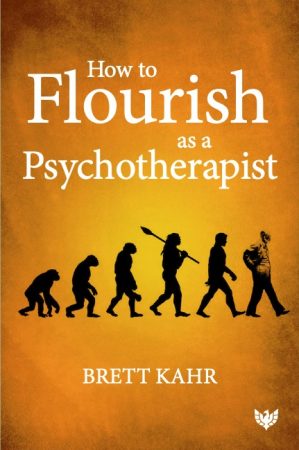
Kahr has continued to publish books and papers. In the last several months, his latest book, How to Flourish as a Psychotherapist, appeared from Phoenix Publishing House (www.phoenixpublishinghouse.co.uk), founded by Kate Pearce and Fernando Marques. The publishers launched this event at Waterstones in Hampstead, North London. Kahr has written this book for psychotherapists of all ages, from those contemplating training to those at the end of their careers, exploring how colleagues can engage maximally with this challenging but, potentially transformative career.
His book Coffee with Freud (Routledge / Taylor and Francis Group) has now appeared in Turkish translation from Sfenks Kitap, the Istanbul publishers, under the title Freud’la Bir Fincan Kahve, translated by Sehnaz Layikel; and his book Tea with Winnicott (Routledge / Taylor and Francis Group) has appeared in a Farsi translation from the Tehran publishers Binesh No, under the title Chãy Bã Winnicott, translated by Mahyar Alinaghi. A profile of Kahr appeared in Therapy Today, and his article on “Freud’s Death Bed: Notes on the “Invalid Couch” at Maresfield Gardens”, appeared in New Associations. He also wrote a foreword to the English translation of Dr. Ulrike May’s new book on Freud at Work: On the History of Psychoanalytic Theory and Practice, with an Analysis of Freud’s Patient Record Books (Routledge / Taylor and Francis Group) which has appeared in the “History of Psychoanalysis Series” which Kahr co-edits with fellow psychoanalytical historian Professor Peter Rudnytsky.